Written by
Best Clean Kansas City
Published on
September 2, 2026

Multifamily is the project type where post-construction cleaning stops being a task and becomes a logistics problem. You are not cleaning a building. You are cleaning 216 small buildings stacked on top of each other, plus corridors that stay dirty because everyone keeps walking through them, plus amenity spaces that have to be photo-ready for the leasing team before half the units are finished.
We ran the cleaning scope on a 216-unit development across two buildings totaling roughly 300,000 square feet, delivered in phases. Here is how the sequencing actually works, and where GCs and property managers most often lose time and money.
The instinct is to clean by floor. The better model on most multifamily jobs is to clean by stack and completion state, because units on the same floor are rarely at the same stage.
A workable unit sequence:
The mistake that costs the most is detailing a unit before punch. A unit that gets detailed, then has a countertop swapped and a door re-hung, is a unit you are paying to clean twice. Hold the detail clean until the unit is punch-complete, then protect it: lock it, and control who has the key.
These get conflated constantly, and on a phased delivery you will need both on the same property at the same time.
A construction clean removes construction residue: drywall dust in every crevice, adhesive and caulk on glass, paint overspray on hardware, mud on the slab, grout haze, protective film, stickers, and the fine grit that settles on top of every horizontal surface. It is aggressive, it uses different chemistry, and it takes roughly two to three times as long per unit as a make-ready.
A turnover clean (make-ready) removes occupancy residue between tenants. Kitchen and bath soil, appliance interiors, floors, fixtures, and a general reset. It is a shorter, more predictable scope.
Why this matters on a phased delivery: units finished in the first building may sit for six to ten weeks before lease-up while the second building is still framing. Dust migrates. Trades walk through completed units to access chases and risers. A unit that was construction-cleaned in March and leased in June needs a turnover clean in June. Budget for it, or the leasing team will find it for you on a tour.
If you manage the property side of this as well as the build, our property management cleaning page covers the ongoing make-ready side. The terminology distinction is broken down further in rough clean vs. final clean.
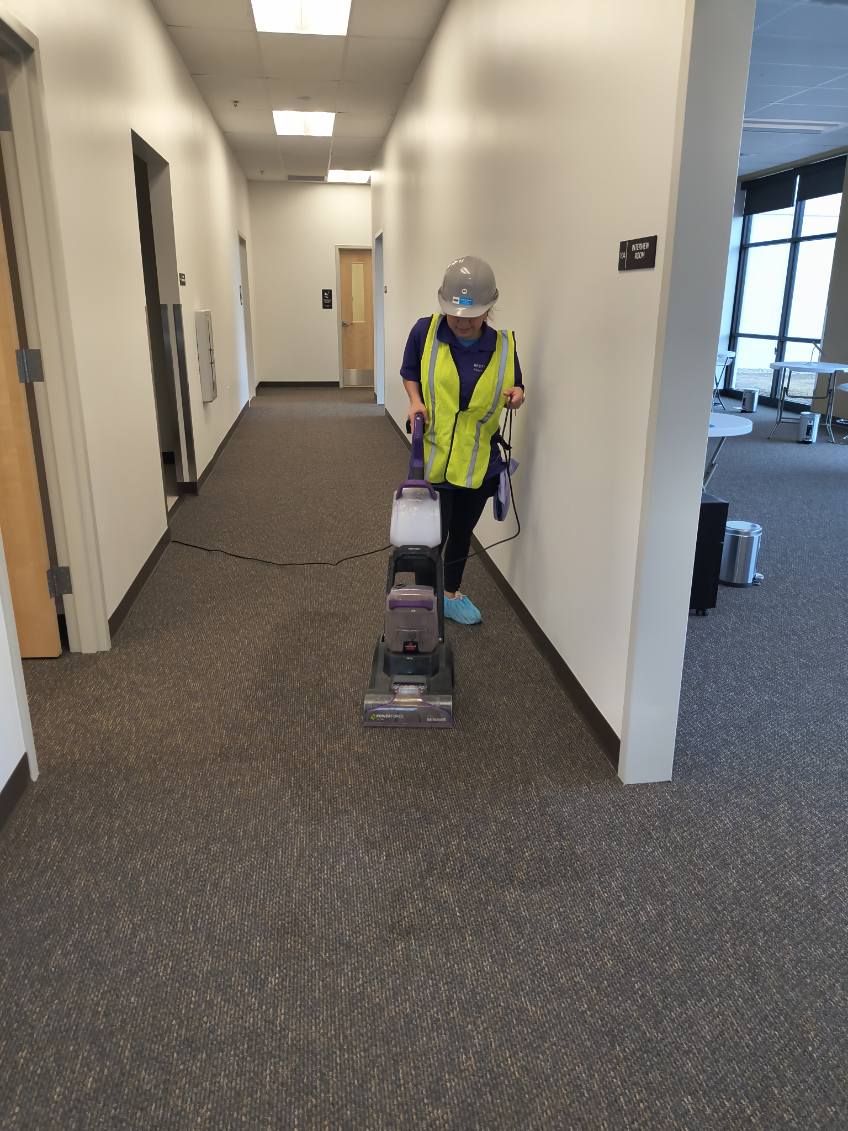
Corridors are the hardest thing to keep clean on a multifamily job, because they are the circulation path for every trade delivering material to every unit. Clean a corridor once and it is dirty by lunch.
What works:
This surprises GCs the first time. The leasing office, model units, clubroom, fitness center, and pool deck often have to be finished and spotless well before the building is done, because pre-leasing starts months before certificate of occupancy on the last unit.
Treat amenities as their own mini-project with their own three phases:
Phased delivery means you have occupied units, finishing units, and active construction on the same property. That imposes real constraints:
To get a bid that holds up, provide the unit mix and square footages by unit type, the finish schedule, the flooring submittals with any manufacturer initial-clean specs, the delivery phasing plan with dates, the common-area and amenity square footage, and your punch process. A contractor who prices multifamily off a total building square footage without a unit count is guessing.
For the underlying phase model and how it maps to a build calendar, read our general contractor's guide to post-construction cleaning in Kansas City, and see what post-construction cleaning actually costs for per-unit and common-area pricing logic.
Best Clean KC is a second-generation family cleaning company based in Overland Park, serving general contractors and developers across Johnson County and the Kansas City metro. We staff with W-2 employees, not subcontractors, so the crews on your property are insured, background-checked, and consistent across a delivery that may run a year. We carry our own equipment, hold a COI, and can add your firm as additional insured.
Send us the unit mix and the phasing plan. We will walk both buildings and build a scope that tracks your delivery schedule instead of fighting it. See our post-construction cleaning services, or call 913-318-4664.